

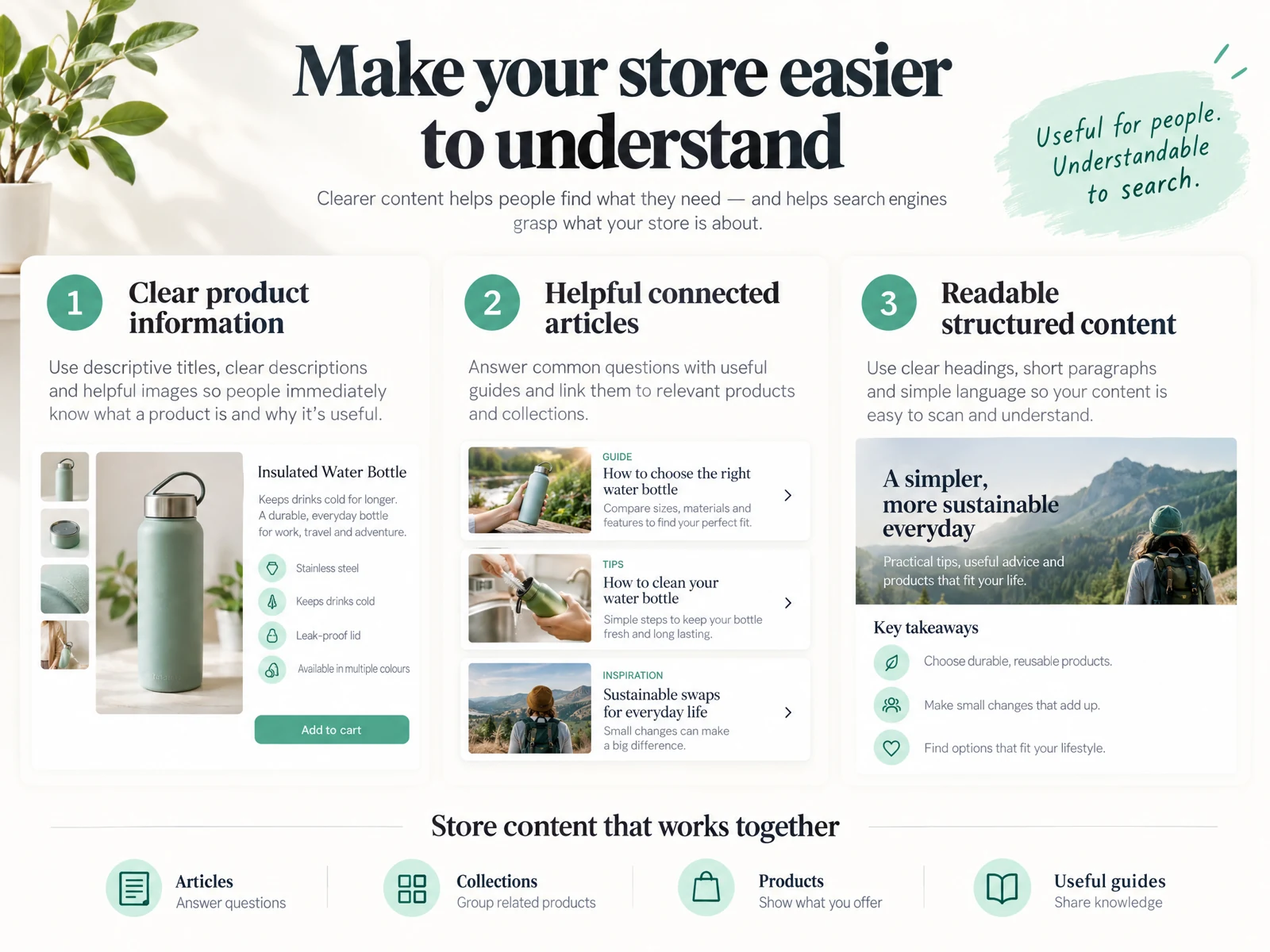
Why historical context matters: 2025 signals and 2026 reality
Search behavior and tooling shifted noticeably in 2025: generative AI assisted writing, query summaries, and new snippet layouts changed how content was discovered. For merchants, that year produced useful experiments and keyword phrasing—especially longer, conversational queries—that still influence how people phrase searches in 2026.
When you plan a Shopify SEO content strategy AI 2025–style update in 2026, treat 2025 as a lab report: keep the tactics that proved reliable (clear product intent, structured content, helpful FAQs) and retire practices that relied on brittle format-specific hacks. The goal is durable content that performs across evolving SERP presentations.
- Audit prior 2025 content by traffic and conversion, not by impressions alone.
- Keep conversational long tails if they align with purchase intent.
- Avoid reliance on a single snippet format or tool-specific feature.
Foundations: keyword intent, commerce signals, and AI assistance
Start every page and blog with a clear intent statement: is this content aimed at discovery, comparison, or purchase? For products, prioritize purchase intent keywords and product-benefit language; for blogs, target discoverability and internal linking opportunities. That intent statement guides how you use AI helpers—prompt them to draft with the intent in mind, not to rewrite blindly.
Use AI to accelerate drafting and variations, but validate. Generate title candidates, meta descriptions, and H2 cluster suggestions from prompts that contain your intent statement, product facts, and customer language. Then refine those outputs with real product details, pricing, shipping policies, and verified specs so the content remains factual and useful.
- Write a one-sentence intent for each page before generating content.
- Prompt AI with verified product facts; mark anything unverified as draft.
- Prioritize purchase-intent terms for product pages, informational for blogs.
Structure and on-page layout for Shopify stores
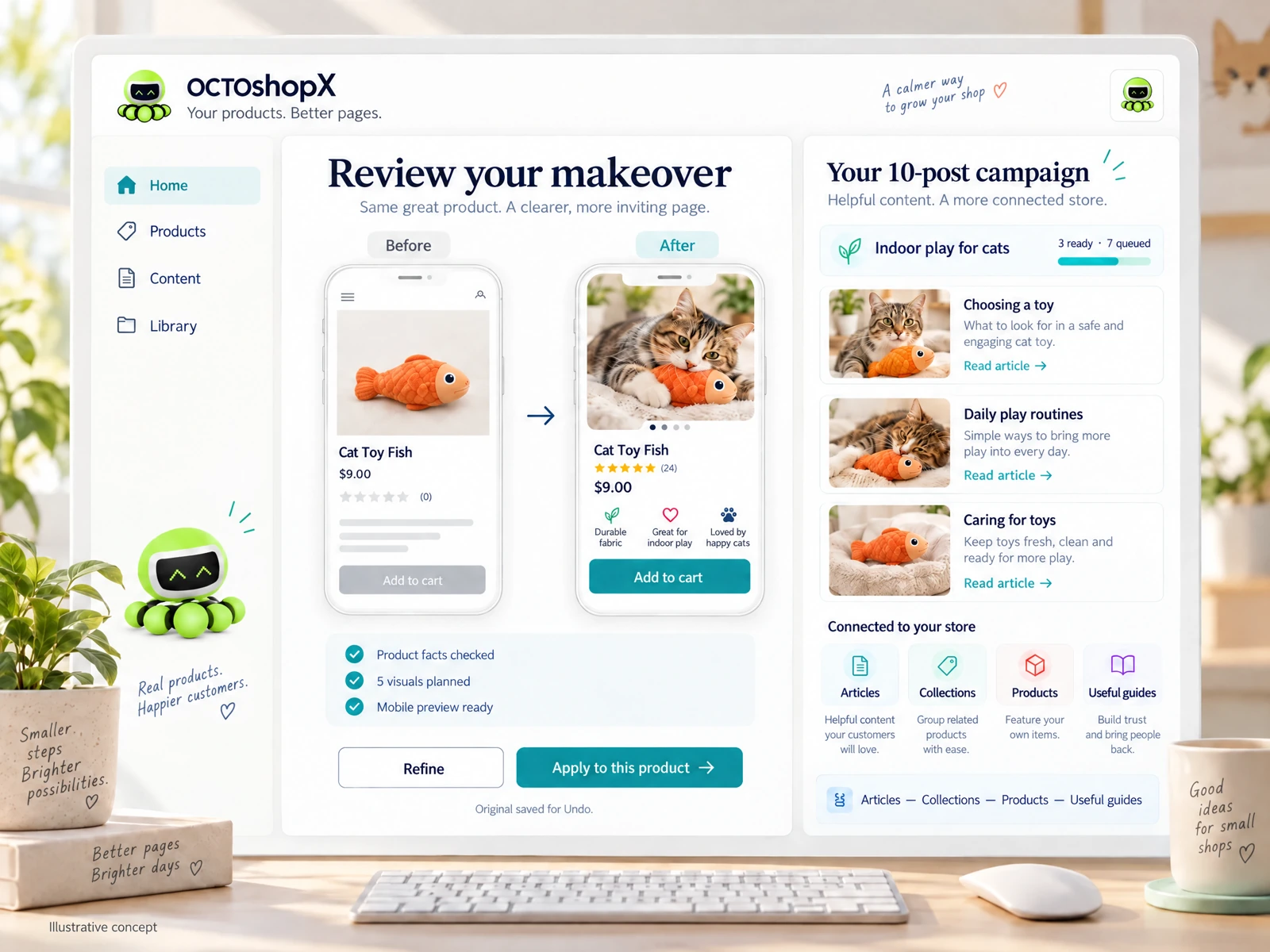
Shopify themes render content differently; don’t assume a generic connection will preserve visuals. Plan content blocks that map to your theme’s capabilities: hero, features, specs table, bulleted uses, reviews, and FAQ. Each block should have a single purpose and a clear internal linking plan to related products, collections, and long-form guides.
Use succinct headings and short paragraphs optimized for scannability. Breadcrumbs, concise product summaries, and clearly separated technical specs help both shoppers and search engines. When AI assists with copy, check that generated headings match the rendered visual order so internal anchors and previews remain accurate.
- Map content blocks to your live theme before publishing.
- Keep headings simple and ordered; match H tags to visual sequence.
- Ensure internal links point to verified collection or product pages.
Content scale and campaigns: 1–10 products/pages with manageable previewing
For many merchants, small, focused campaigns outperform large scattershot efforts. A 1–10 product or page campaign lets you preview and refine visuals, copy, and internal links before wider rollout. Use campaigns to test headline variants, CTAs, and FAQ formats that reflect real customer questions.
Measure success with a short test window: impressions, click-through rate, internal engagement (time on page, add-to-cart), and conversion lifts. If an AI-drafted variant increases engagement, scale cautiously—keep the original saved so you can undo or iterate without losing the baseline.
- Run focused campaigns of up to 10 pages or products for controlled testing.
- Preview and verify visuals and layout before applying across the store.
- Save originals and use incremental rollouts for scaling winners.
Read the connected-content guide or explore product and blog specimens.
Visuals, reviews, and internal links: making AI-assisted content trustworthy
Good visuals and trustworthy social proof amplify SEO copy. Use AI to produce layout suggestions and multiple visual variations, but check that images reflect real products and that review excerpts link to genuine sources. Visual previewing before publish prevents mismatches between copy claims and product images.
Internal links should follow a useful shop structure: product → collection → guide. AI can suggest related articles and collections, but verify those links exist and lead to helpful content. A generic connection that copies links without human review can create dead ends or poor user experience.
- Verify all images against real product photos before publishing.
- Ensure review snippets and claims link to real reviews or sources.
- Confirm related-article and collection links exist and add value.
Editorial review, updates, and governance for low-hallucination outputs
AI outputs can be efficient but require editorial governance. Create a short checklist for every AI-assisted piece: factual accuracy, price and shipping verification, brand voice, and link validation. Use that checklist as a non-optional step before any push to live to reduce mistakes that can harm SEO and shopper trust.
Plan periodic content reviews: quarterly for product pages, semiannually for cornerstone guides. Track where AI helped and keep a changelog so you can roll back to verified content if an update harms performance. Remember that a connection or automation alone does not ensure faithful visuals, clear layouts, or accurate internal links—human review closes that gap.
- Use a pre-publish checklist covering facts, prices, and links.
- Log AI-assisted changes and review performance regularly.
- Keep an undo-safe copy of original content for rollback.
Can I rely entirely on AI to create my Shopify product pages?
No. AI is a powerful drafting tool but should not be the sole source of truth. Use AI for drafting variants, headlines, and FAQ suggestions, then verify facts such as specifications, pricing, shipping, and imagery. Human review ensures the output matches your products and brand voice.
How do I prioritize pages to update first under this Shopify SEO content strategy AI 2025 approach?
Start with pages that drive revenue or traffic: top-selling products, high-traffic category pages, and cornerstone guides. Run focused campaigns of 1–10 pages to test changes, preview visuals and links, and measure engagement before scaling updates.
What metrics should I track after applying AI-assisted content updates?
Track impressions, click-through rate, on-page engagement (bounce rate, time on page, add-to-cart), and conversion rates. Also monitor internal link clicks and any search ranking changes for prioritized keywords. Compare against the saved original content to judge net impact.
Install OCTOshopX. Give your store one clear job.
This updated playbook blends lessons from 2025 with practical 2026 controls: use AI thoughtfully, verify facts, preview visuals and links, test in small campaigns, and keep an undo-safe original. Install OCTOshopX.
A calm Shopify Product & Blog Studio: 5–10 useful visuals, connected articles and products, preview before publishing, and 1-Click Undo when needed.