

Start with facts a shopper can verify
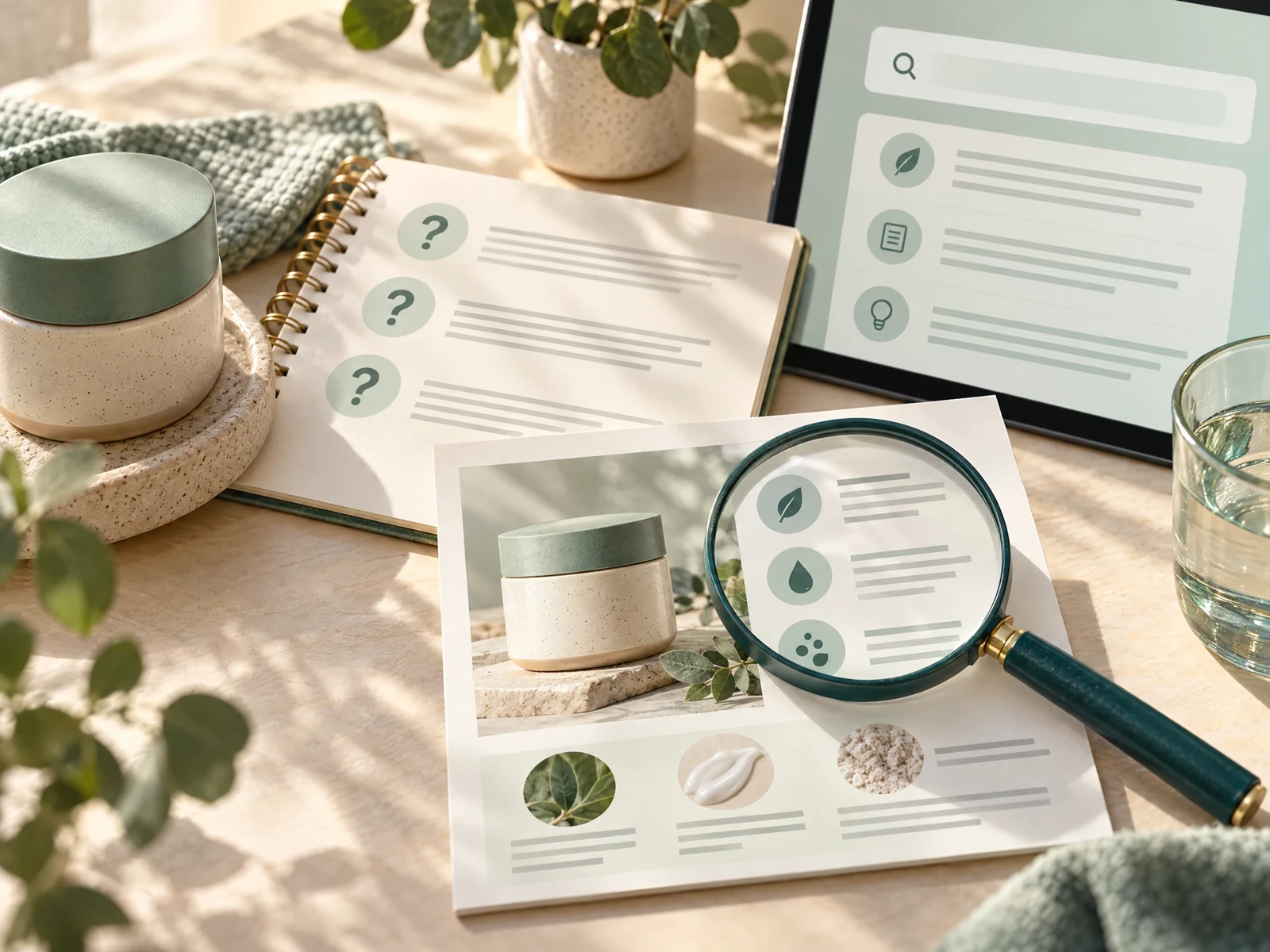
AEO (answer engine optimization) and GEO (generative engine optimization) are labels for making useful information easier for answer engines and generative search to find, interpret, and reference. For a Shopify merchant, the first step is not adding a new acronym to every page. It is making each product page answer the questions a customer would ask before buying, in direct language and with details that match the item actually sold.
For example, a store selling insulated travel mugs should state capacity, dimensions, materials, care instructions, lid compatibility, and what is included. If a 20-ounce version is only available in two colors, do not imply that every color comes in every size. A clear, maintained product page is useful to people and gives automated systems less ambiguity to resolve.
- Name the specific product and explain who it suits, rather than relying on vague superlatives.
- Keep price, variant names, availability, shipping, and returns aligned with the live store and policies.
- Separate measured specifications from claims that need evidence, such as performance or sustainability statements.
Use structured data as a translation layer, not a ranking promise
Structured data labels information in a machine-readable format. Google says product markup can make pages eligible for richer search presentations, including price, availability, ratings, shipping, and returns. It distinguishes product snippets from merchant listings, which apply to pages where customers can purchase, and supports data for variants. Eligibility is not a promise that a special result will appear; Google says presentation is decided by each experience and can change.[1]
A Shopify merchant selling a ceramic pour-over set could ensure its product data identifies the item, current price, stock status, and variant details correctly. Use the appropriate product markup for purchasable pages, and review whether the theme or installed apps already emit schema before adding another source. Duplicated or conflicting markup can muddy the facts instead of clarifying them.
- Check product and variant details in rendered pages, not only in a schema generator's settings.
- Validate markup and correct errors, then compare its price and availability with the visible page.
- Treat ratings and review data carefully: mark up genuine customer feedback, never invented endorsements.
Keep feeds and storefront information in sync
Page markup is one route for sharing product information; a product feed can be another. Google recommends using both structured data and a Merchant Center feed when available because the combination can improve eligibility and help Google understand and verify data.[1] OpenAI's merchant guidance says product feeds can provide richer details and keep prices and availability current; its page states that Shopify catalogs are already integrated for its shopping experience in the U.S. at the time of that guidance.[2] Availability and program details may vary by market and change over time.
Imagine a candle maker discounts a seasonal scent for one weekend. If the product page, structured data, and feed show different prices or availability, shoppers and search systems may encounter inconsistent information. Set a routine for checking what is published after price changes, product launches, and inventory updates.
- Use stable product identifiers and consistent variant naming wherever your sales channels support them.
- Check feed diagnostics and resolve rejected, missing, or stale attributes rather than assuming submission is enough.
- Do not state that a feed guarantees visibility; OpenAI describes it as a way to improve product representation and freshness, not a placement guarantee.[2]
Write useful buying guidance around the catalog
A product listing answers what an item is; a good guide helps a shopper decide whether it fits a real need. Build articles around questions your support team hears, then link to the relevant collection and products. A home-goods shop might publish a guide comparing linen and cotton bedding by feel, care, and climate, while clearly noting what its own products are made from.
Use headings that describe the question being answered, explain trade-offs in ordinary language, and include examples grounded in your catalog. Keep the article current when products or policies change. Avoid generic AI-written pages that repeat search terms but add no useful detail; a smaller set of accurate guides is more helpful than a large archive of thin variations.
- Answer one specific customer question per section and link to the page where the item can be checked.
- Distinguish general advice from store-specific facts, and disclose relevant limitations or exceptions.
- Add original photos or diagrams where they clarify size, use, fit, or care—not merely to decorate a page.
Read the connected-content guide or explore product and blog specimens.
Make pages accessible to crawlers and people
Search visibility also depends on whether pages can be discovered and read. Keep important products linked from collections and navigation, avoid blocking pages you intend to be public, and check that product details are available in the page rather than hidden behind an interaction that prevents access. Use descriptive image alt text for meaningful product images; it should say what is pictured, such as “blue ceramic mug beside its matching saucer,” rather than cram in keywords.
Perplexity has described product cards and shopping discovery informed by product details, and its Merchant Program offers participating large retailers a way to share product specifications. Its announcement says richer details can help determine whether a product is relevant, while describing increased chances rather than assured recommendations.[3] This is a useful reminder to prioritize complete, accurate information—not to treat any platform's inclusion as an entitlement.
- Inspect a representative product page on a phone and confirm its content, links, and images work without special assumptions.
- Use readable titles, descriptive links, and concise image descriptions that help customers navigate.
- Review robots and indexing settings before diagnosing a page that cannot be found.
Measure what you can control—and review every change
There is no universal dashboard that proves a page will be cited by ChatGPT, Perplexity, or another answer engine. Monitor the signals available to your store: organic impressions and clicks, product-feed diagnostics, relevant referral traffic, and customer questions. Record a baseline before changing important pages, then assess whether the update improved clarity, qualified traffic, or sales over a reasonable period. Search interfaces and their selection rules evolve, so avoid drawing conclusions from one isolated answer.
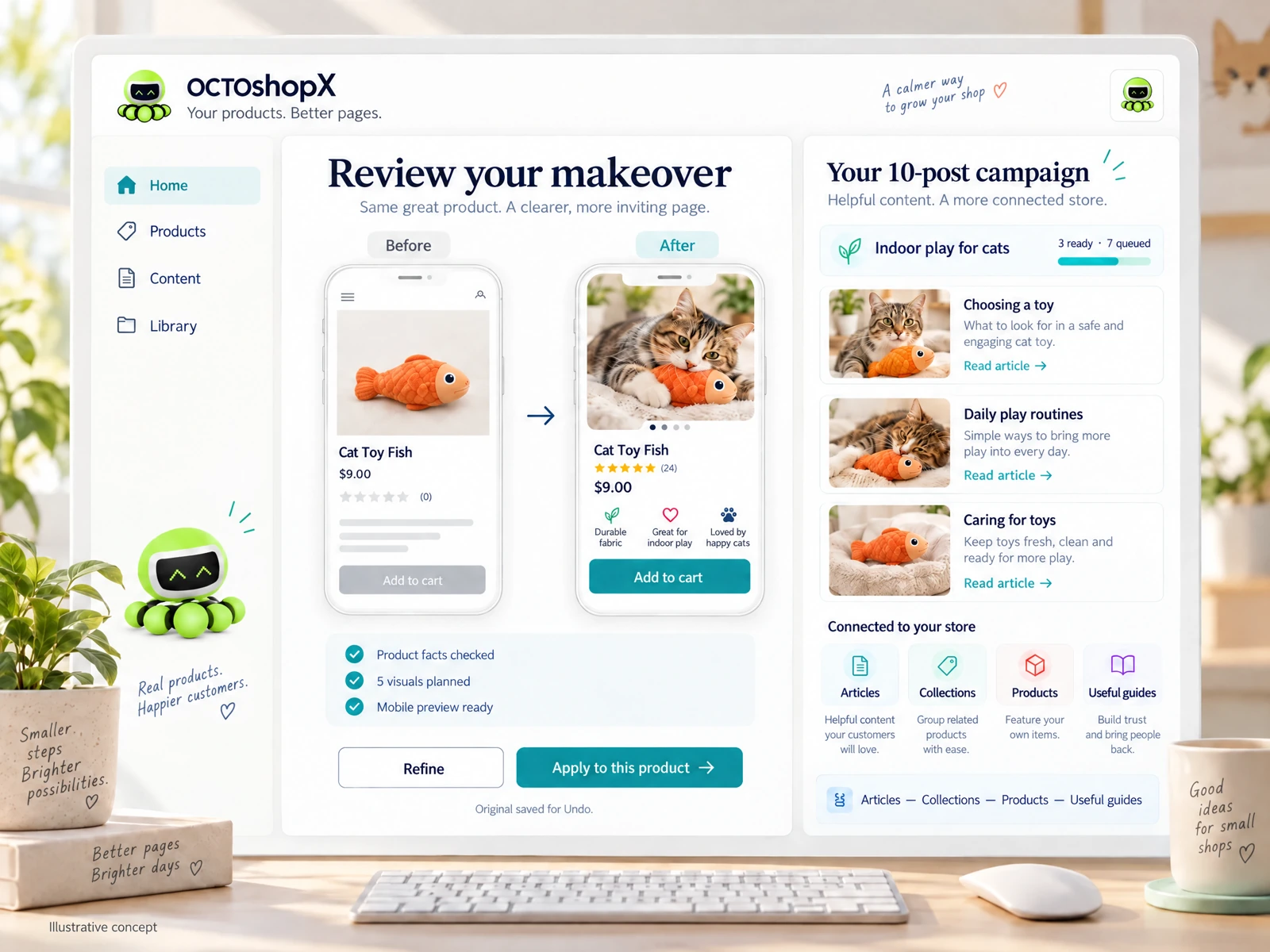
If using a content assistant, retain a human review step for factual claims, schema fields, and tone. A competitor's Shopify App Store listing currently describes bulk product descriptions, SEO metadata, product and blog content, JSON-LD, and a free plan for AI Product Description‑ChatGPT.[4] Capabilities and terms can change; that listing is a comparison point, not evidence of performance or a reason to publish unreviewed copy. OCTOshopX is planned as a Shopify Product & Blog Studio, not a proven or currently installable product. Its planned workflow emphasizes real product facts and photos, batches of 1–10 products, useful visuals, mobile preview, review before applying changes, and Undo. It is not a promise of AI citations.
- Compare the page before and after: are the facts clearer, consistent, and easier to verify?
- Review product batches individually, including images, variants, and any generated structured data.
- Track platform changes and revisit guidance periodically instead of assuming one-time optimization lasts forever.
Does adding Product schema make ChatGPT or Perplexity cite my Shopify store?
No. Correct structured data can make product facts easier for systems to interpret and can support eligibility for certain Google search presentations. Neither schema nor any content tool guarantees a citation, ranking, recommendation, or sale. Keep the visible page accurate and useful, and treat discovery as an outcome to monitor rather than promise.
Should I use product schema, a product feed, or both?
Where the platform and your setup support them, both can help keep information clear and current. Google specifically recommends page structured data alongside a Merchant Center feed when available, noting that this can maximize eligibility and help it verify product details.[1] Check that both sources agree with the live product page, especially on price, stock, and variants.
Do I need to rewrite every product page for AI search?
Usually, start with the pages and questions that matter most to shoppers. Improve high-traffic or high-confusion products first: clarify specifications, variant differences, fit, care, delivery, and return information. Then add genuinely useful buying guides and maintain feed and schema accuracy. Do not replace precise product facts with repetitive keyword-heavy copy.
Sources & comparison notes
Provider-described features and prices can change. Check the linked sources and purchase terms before choosing a service.
- Introduction to Product structured data — Google Search Central · checked 2026-10-17
- Power product discovery in ChatGPT — OpenAI · checked 2026-10-17
- Shop like a pro: Perplexity’s new AI-powered shopping assistant · checked 2026-10-17
- AI Product Description‑ChatGPT — Shopify App Store · checked 2026-10-17
Install OCTOshopX. Give your store one clear job.
AI search makes clear, consistent product information more important, not less. Start with accurate Shopify pages, appropriate structured data, current feeds, and genuinely useful buying guides; review every change and measure real outcomes without expecting guaranteed citations. Install OCTOshopX.
A calm Shopify Product & Blog Studio: 5–10 useful visuals, connected articles and products, preview before publishing, and 1-Click Undo when needed.